

 AMOLED stands for Active Matrix Organic Light Emitting Diode. It is a type of display technology that is becoming increasingly popular in smartphones, tablets, and other devices. AMOLED displays offer a number of advantages over traditional LCD displays, including:
- Better contrast: AMOLED displays can produce true blacks, which results in a much higher contrast ratio than LCD displays. This makes AMOLED displays ideal for watching movies or playing games in dark environments.
- Wider viewing angles: AMOLED displays have wider viewing angles than LCD displays, so you can still see the image clearly from the side.
- Faster response time: AMOLED displays have a faster response time than LCD displays, so they are better suited for gaming and other applications that require fast motion.
- Lower power consumption: AMOLED displays consume less power than LCD displays, so they can extend the battery life of your device.

 Folding smartphones are a new type of smartphone that has a display that can be folded in half. This allows the phone to be more compact and portable when folded, while still providing a large display when unfolded.
The first folding smartphone was the Samsung Galaxy Fold, which was released in 2019. The Galaxy Fold has a 7.3-inch AMOLED display that can be folded in half to create a device that is about the size of a small tablet.

 Gmail, Google’s popular email service, has become an integral part of our digital lives. However, recent reports have highlighted Google’s policy regarding inactive Gmail accounts. According to the policy, if you haven’t logged into your Gmail account for two years, Google reserves the right to delete it. In this blog post, we delve into the details of Google’s deletion policy, its implications, and steps you can take to safeguard your account.
Google’s Account Inactivity Policy

 AirConsole and Team17 have joined forces to offer an innovative way of playing iconic Team17 games to millions of gamers in over 180 countries. Soon, users will be able to enjoy their favorite titles like never before, using car screens as video game consoles and their smartphones to control their characters.
Already known for providing seamless multiplayer gaming experiences on PC, Mac, Android TV, and Amazon Fire TV, AirConsole recently showcased at GDC how they are shaping the in-car gaming landscape with BMW. For Team17 Digital fans and gaming newcomers alike, this will mean the ability to play fun family favorites on their BMW within seconds. Since they will be pre-installed on all vehicles featuring AirConsole, there is no need to browse indefinitely through an overcrowded app store within the entertainment system.

 A resin 3D printer works by curing a liquid photopolymer resin layer by layer using a UV laser or projector. The resin is contained in a vat, and the build platform (the surface that the object is printed on) is lowered into the resin one layer at a time. The UV laser or projector then cures the resin in the desired pattern, hardening it into a solid layer. The build platform then raises, and the process repeats until the object is complete.
Resin 3D printers can produce objects with very fine detail, and they are often used to create prototypes, jewelry, and other objects that require a high level of precision. However, resin 3D printers can be more expensive than filament 3D printers, and they require the use of hazardous materials (the resin and the UV light).
Here are the steps on how a resin 3D printer works:
- Prepare the resin. The resin needs to be mixed thoroughly before printing. This can be done by shaking the bottle or using a magnetic stirrer.
- Create the 3D model. The 3D model needs to be created in a 3D modeling software program. Once the model is created, it needs to be sliced into layers. This is done by using a 3D slicing software program.
- Load the resin into the printer. The resin is loaded into the vat of the printer. The vat is usually made of transparent plastic so that the UV laser or projector can shine through.
- Position the build platform. The build platform is lowered into the vat of resin. The build platform is usually made of metal or glass.
- Start the printing process. The UV laser or projector starts to cure the resin in the desired pattern. The build platform raises one layer at a time, and the process repeats until the object is complete.
- Remove the object from the printer. Once the object is complete, it needs to be removed from the printer. The object is usually removed by lifting it off of the build platform.
Resin 3D printers are a great way to create objects with very fine detail. However, they can be more expensive than filament 3D printers, and they require the use of hazardous materials.

 The Internet of Things (IoT) is the network of physical objects that are embedded with electronics, software, sensors, actuators, and connectivity which enables these objects to collect and exchange data.
IoT has the potential to revolutionize many industries, including manufacturing, healthcare, transportation, and energy. For example, IoT-enabled devices can be used to monitor and control manufacturing processes, improve patient care, home automation, optimize transportation routes, and manage energy consumption.
The benefits of IoT include
- Increased efficiency and productivity: IoT can help businesses to improve their efficiency and productivity by automating tasks, collecting data, and making better decisions.
- Improved customer experience: IoT can help businesses to improve the customer experience by providing personalized services and recommendations.
- New business opportunities: IoT can create new business opportunities by enabling businesses to connect with customers in new ways and provide new products and services.
The challenges of IoT include
- Security: IoT devices are often connected to the internet, which makes them vulnerable to security attacks.
- Privacy: IoT devices collect a lot of data about users, which raises privacy concerns.
- Standardization: There is no single standard for IoT, which can make it difficult to connect different devices and systems.
The future of IoT is bright. As the technology continues to develop, we can expect to see even more innovative and transformative applications of IoT in the years to come.
Here are some examples of how the Internet of Things is being used today
- In manufacturing, IoT is being used to monitor and control production lines, improve quality control, and reduce waste.
- In healthcare, IoT is being used to monitor patients’ health conditions, provide remote care, and improve patient outcomes.
- In transportation, IoT is being used to improve traffic flow, reduce accidents, and optimize public transportation.
- In energy, IoT is being used to monitor energy usage, improve energy efficiency, and generate renewable energy.
These are just a few examples of the many ways that IoT is being used today. As the technology continues to develop, we can expect to see even more innovative and transformative applications of IoT in the years to come.

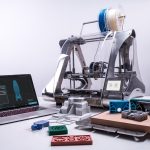 Are you looking for the best 3D printer for home users and enthusiasts? The market is constantly evolving, and it can be hard to keep up with the latest trends and features.
We’ve done the research so you don’t have to. In this article, we’ll compare and contrast some of the best 3D printers available right now. We’ll look at their features, ease of use, budget-friendliness, and customer feedback to help you make an informed decision when selecting your own 3D printer.
Whether you want a basic desktop model or one with more complex capabilities, we can help you find the perfect 3D printer for your needs. Read on to discover our top recommendations for home users and enthusiasts!
What Is 3D Printing and How Does It Work?
If you’re wondering what 3D printing is, the answer is simple: it’s a manufacturing process that prints three-dimensional objects. 3D printing works by layering materials, like resin, plastic, or even metal, to create a physical object from a digital model.
The printer itself builds an object in successive layers, with each layer made from the same material. Once each layer has been printed, the layers are then fused together to form the finished product. The entire process happens quickly and efficiently compared with traditional manufacturing processes.
3D printing is also incredibly versatile; almost any shape or design can be printed depending on the type of printer used. The printers themselves can come in various shapes and sizes – from desktop models that fit on a table to high-end industrial machines that are capable of producing complex objects.
The capabilities of 3D printers means they’re perfect for home users and enthusiasts alike – especially given the relatively low cost of today’s entry-level models. Plus, modern 3D printers are easier to set up and use than ever before.
Best Budget 3D Printer: XYZprinting Da Vinci MiniMaker
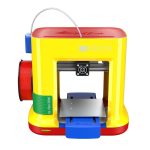 If you’re on a tighter budget, the XYZprinting Da Vinci MiniMaker is an excellent choice for the home enthusiast. This lightweight and compact 3D printer offers a considerable amount of control and flexibility for its price range. It has a build area of 5.9” x 5.9” x 5.9”, so it can print larger objects with ease. Its simple interface makes it easy to use right out of the box, and there are plenty of education guides available to help you get started.
In addition to its convenience, this 3D printer also offers great value in terms of features. The Da Vinci MiniMaker features automatic bed-leveling, assisted bed calibration and filament detection that automatically pauses printing when running low on filament or when the filament runs out entirely. It is also compatible with multiple materials such as PLA and XYZware Pro filament so you can customize your prints according to your preferences.
Best Mid-Range 3D Printer: FlashForge Finder 3D Printer
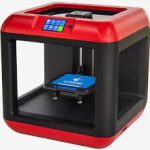 The FlashForge Finder 3D Printer is our pick for the best mid-range 3D printer for home users and enthusiasts. It is perfect for those who are looking for a reliable 3D printing experience, but don’t want to break the bank.
This 3D printer offers a wide range of features that you’d expect from a higher end model, like Wi-Fi connectivity and an auto-calibration system. It also has a large build area, with generous dimensions of 5.9×5.9×5.9 inches (150x150x150 mm). This makes it ideal for more ambitious projects, such as creating figurines or larger models.
The FlashForge Finder also has some impressive print speed and resolution capabilities, with the potential to produce high-resolution prints at up to 100 microns. It’s easy to set up and use, making it great for beginners, but also offers advanced functions like a power outage recovery system that restarts your prints in case of an interruption.
Overall, the FlashForge Finder provides an excellent balance of functionality and affordability that make it the perfect choice for home users and enthusiasts looking for a reliable mid-range 3D printer.
Best High-End 3D Printer: Ultimaker 2+ 3D Printer
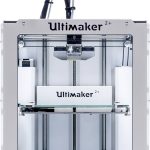 If you’re looking for a top of the line 3D printer that can do it all, consider the Ultimaker 2+ 3D Printer. This printer is designed to deliver exquisite prints with extreme accuracy and reliability. It features an updated extruder system and several advanced features that make it stand out from other high-end 3D printers.
Key Features
The Ultimaker 2+ includes a suite of features to help maximize your printing experience:
- Precision: It utilizes a 20 micron layer resolution for exceptional accuracy and detail.
- Speed: Its “Dual Extrusion” system enables two materials to be used in one print job, which increases speed by up to 30%.
- Connectivity: You can easily connect your Ultimaker 2+ to any device with Wi-Fi or Ethernet connection.
- Filament Compatibility: The printer supports a wide range of filaments, including PLA, ABS, Nylon, CPE and CPE+.
- Safety Features: The printer comes with advanced safety features such as temperature control and dimensional accuracy checks to help ensure that your prints are successful every time.
Whether you’re just starting out or a seasoned pro, the Ultimaker 2+ makes for an outstanding 3D printing experience at home.
Other Top 3D Printers for Home Use
In the market for a 3D Printer but not sure which one to choose? Here are some of our top-recommended models that provide excellent quality, reliability, and value.
Prusa i3 MK3
The Prusa i3 MK3 is a feature-packed machine that offers plenty of features and options for users who want to get serious about 3D printing. It has an upgradable frame and interchangeable nozzles for increased flexibility. It also includes many safety features such as filament runout detection and power panic recovery, so you can be sure your prints will be of the highest quality each time.
Ultimaker 3 Extended
This is an advanced model aimed at those looking for professional-level results. It comes with an improved nozzle system and a heated bed to ensure consistent high-quality prints. It also has an intuitive user interface that makes it easy to use – you can even access remote printing via WiFi!
Flashforge Finder
This entry-level model is perfect for beginner hobbyists who want a reliable printer without breaking the bank. It comes with a heated build plate, auto calibration, dual extruders, and an intuitive touchscreen interface for easy navigation. The enclosed slicing software also makes it easier to manage your projects from start to finish.
3D Printing Materials: PLA vs ABS Filaments
3D printing enthusiasts must decide between two popular materials: PLA or ABS filament. There are distinct differences between the two that must be taken into account when choosing the right 3D printer for your needs.
PLA Filaments
PLA (polylactic acid) is a type of biodegradable plastic produced from corn starch or sugarcane. PLA is popular because it is easy to print with and has low warping and shrinking characteristics. This makes it the perfect choice for intricate designs and objects with moving parts, as there is less risk of any distortions occurring during the printing process. It’s also available in a wide range of colors, so you can easily create bright and colorful objects. However, PLA doesn’t have the highest temperature tolerance, making it inappropriate for very hot applications such as electronics enclosures.
ABS Filaments
ABS (acrylonitrile butadiene styrene) is another type of plastic used for 3D printing that has higher heat and impact resistance than PLA filaments. It’s also more durable, so it’s better suited to create stronger parts with longer-lasting performance. However, ABS often requires a heated bed and enclosure to ensure proper bonding and prevent warping due to its higher melting temperature. It’s also more difficult to work with than PLA, so some users may find this material too challenging to use until they gain more experience as a 3D printer enthusiast.
Conclusion
There are many great 3D printers available for the home user and enthusiast. From basic models that are well-suited for beginners, to more sophisticated models for expert users, there is something for everyone. In this guide, we’ve outlined the best 3D printers for the home user, for both professionals and beginners alike.
Whether you’re a 3D printing newcomer or a seasoned veteran, we hope this guide has provided you with the insight and information you need to make an informed purchase. With a wide variety of options on the market, the perfect 3D printer to suit your needs is out there—so start exploring and discover what 3D printing has to offer today!

 Apple’s new MacBook Pro (14-inch, 2023) is a powerful and versatile laptop that is perfect for creative professionals and power users. It features a new M2 Pro chip, a stunning mini-LED display, and a long-lasting battery.
The M2 Pro chip is a significant upgrade over the previous M1 Pro chip. It offers up to 120% faster CPU performance and up to 40% faster graphics performance. This means that the MacBook Pro can handle even the most demanding tasks with ease.
The mini-LED display is another highlight of the new MacBook Pro. It offers a stunning 2560 x 1600 resolution, a 120Hz refresh rate, and a wide color gamut. The display is also incredibly bright, making it perfect for working in bright environments.
The MacBook Pro also features a long-lasting battery. It can last up to 18 hours of video playback or 12 hours of web browsing on a single charge. This means that you can work all day without having to worry about running out of power.
Overall, the Apple MacBook Pro (14-inch, 2023) is a powerful and versatile laptop that is perfect for creative professionals and power users. It features a new M2 Pro chip, a stunning mini-LED display, and a long-lasting battery. If you are looking for a laptop that can handle anything you throw at it, the MacBook Pro is the perfect choice for you.
Pros:
- Powerful M2 Pro chip
- Stunning mini-LED display
- Long-lasting battery
- Touch ID
- MagSafe
- Thunderbolt 4 ports
- Excellent speakers
- Great keyboard and trackpad
Cons:
- Expensive
- No Face ID
- No USB-A ports
- No SD card slot
- RAM and SSD are not upgradable after purchase
Overall:
The Apple MacBook Pro (14-inch, 2023) is a powerful and versatile laptop that is perfect for creative professionals and power users. It features a new M2 Pro chip, a stunning mini-LED display, and a long-lasting battery. If you are looking for a laptop that can handle anything you throw at it, the MacBook Pro is the perfect choice for you.

 The metaverse is a hot topic in the tech world right now. It’s a virtual world that people can interact with using augmented reality (AR) and virtual reality (VR) headsets. The metaverse is still in its early stages, but it has the potential to revolutionize the way we live, work, and play.
Here are some of the latest developments in the metaverse:
- Facebook has rebranded itself as Meta. The company is investing heavily in the metaverse and plans to make it the “next chapter” for the internet.
- Microsoft is also investing in the metaverse. The company has acquired several VR and AR companies, and it is working on developing its own metaverse platform.
- Other tech giants are also getting involved in the metaverse. Google, Apple, and Samsung are all developing their own VR and AR headsets.
The metaverse is still a long way from being fully realized, but it has the potential to change the way we interact with the world around us. It could be used for everything from gaming and entertainment to education and business. As the metaverse continues to develop, it will be interesting to see how it shapes our future.
In addition to the developments mentioned above, here are some other things to keep an eye on in the metaverse:
- The development of new VR and AR headsets that are more affordable and accessible to the general public.
- The creation of new metaverse platforms that offer a variety of experiences, from gaming and entertainment to education and business.
- The development of new applications and services that are designed for the metaverse.
The metaverse is still in its early stages, but it has the potential to be a major disruptor in the tech world. As the metaverse continues to develop, it will be interesting to see how it shapes our future.

 Apple today unveiled the new MacBook Air, the thinnest and lightest notebook ever from Apple, completely redesigned around its new M2 chip. The M2 chip delivers up to 18% faster CPU performance and up to 35% faster graphics performance than the M1 chip, and the new MacBook Air features a stunning 13.6-inch Liquid Retina display, a 1080p FaceTime HD camera, a four-speaker sound system, and up to 18 hours of battery life.
The new MacBook Air starts at $999 and is available to order today. It will be available in stores starting on July 15.
Connect
Connect with us on the following social media platforms.