

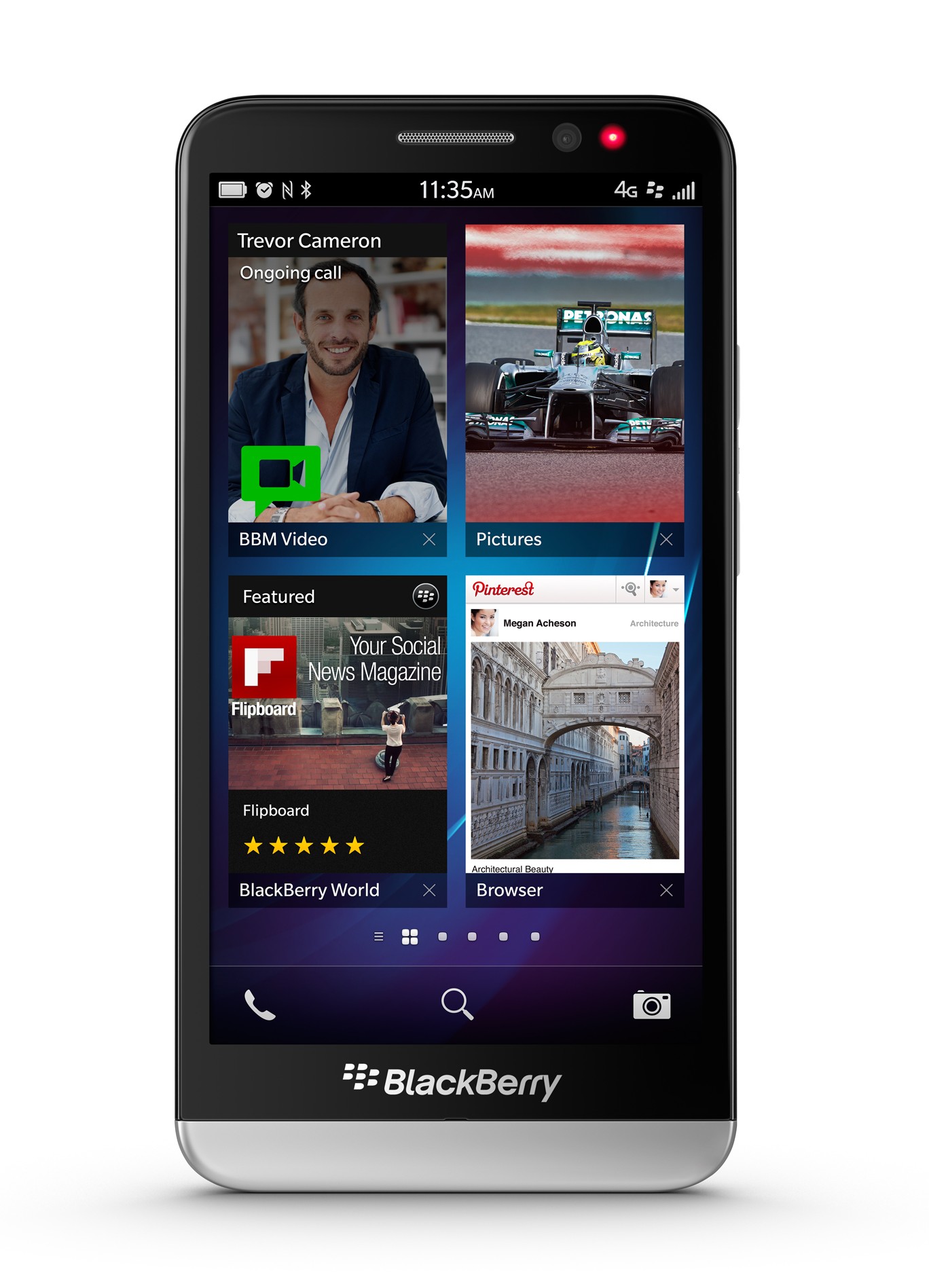
 Announced back in September of this year, the BlackBerry Z30 emerges as the new flagship BlackBerry devices, taking over this spot from the existing Z10.
With its 5.0 inch display, the Z30 is bigger than the Z10 and the screen technology has been changed to Super AMOLED. The advantage here is that AMOLED typically use less power than their LCD counterparts and this coupled with the 2880mAh battery should give the Z30 a healthy endurance.
The Z30 is all touchscreen and comes with the latest iteration of BB10, running 10.2. Not a huge difference here but there are some updated and new features that we’ll cover in more detail in our review.
When we first heard rumours of a new BlackBerry 10 device codenamed Aristo, it was said to be the “most powerful BlackBerry ever”. We now know that phone as the Z30 and inside we find a dual-core Snapdragon S4 Pro CPU clocked at 1.7GHz, 2 GB of RAM and 16 GB on board storage.
Here we have an initial unboxing and demo video of the BlackBerry Z30 where I take a look at the hardware and some of the OS features.
We must also say thanks to Unlocked-Mobiles.com for supplying the loan unit.

 It’s now almost a month since BlackBerry first tried to release BBM for Android and iOS. You may recall that the release started in New Zealand on the 21st September but that this was quickly halted due to an ‘unreleased’ version of the Android app being leaked online and apparently causing serious issues.
However, today BlackBerry have now confirmed that the global roll out will resume and the app is cited to be available within the next few hours on both the Google Play Store and the Apple App Store. Although we expect that the actual availability of the app will vary depending upon the each countrie’s store.
Head of BBM Andrew Bocking said: “Our team of developers and engineers has been working around the clock to bring you BBM – and make some upgrades while we’re at it – and some incredible work has been done.”
As before, a word of caution, particularly to those of you with Android devices. There are a huge number of bogus BBM apps still available in the Play Store so please ensure that you are downloading the correct and official version. Users are encouraged to visit BBM.com for more details.
Update: Anyone that registered their interest in BBM and email is starting to go out as follows:
We promised you’d be the first to know when BBM™ for Android™ and iPhone® is available.
We’re excited to announce that the rollout has resumed!Due to incredible demand there is a line-up to start using BBM. But, since you took the time to sign up in advance, we’d like to give you the chance to start using BBM on Android or iPhone right away without having to wait in line.
Here’s what to do to get past the line-up:
1. Visit BBM.com from your iPhone or Android browser to download BBM.
2. Once the BBM app has been installed, open it.
3. When asked to “Enter your email address to check if you can start using BBM”, use the email address this message was sent to.
4. Get started with setting up BBM.
Note to iPhone users: Apps can take up to a few hours to appear in the App Store

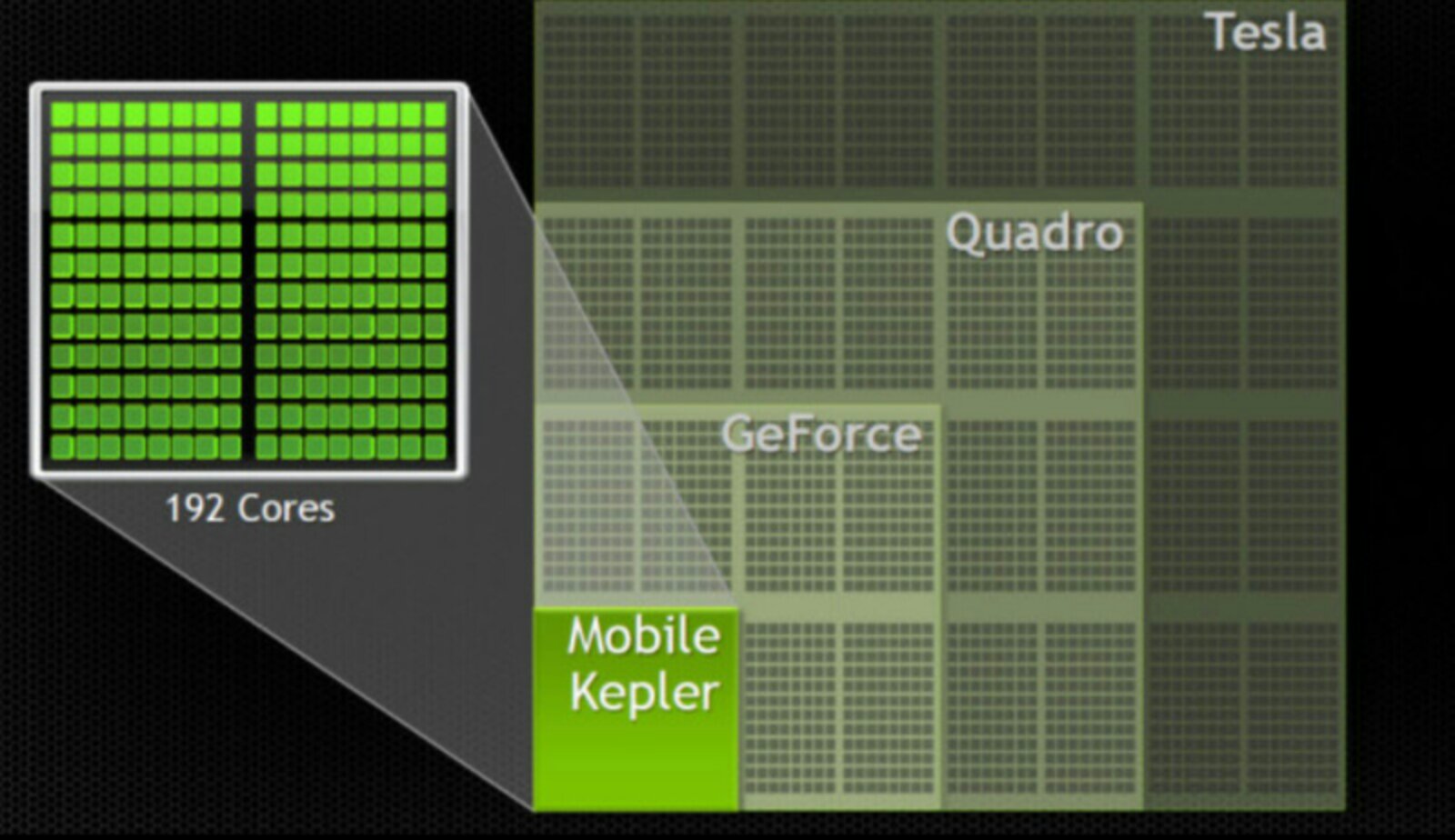 Although we have seen the above tech demo before, there is some new info regarding NVIDIA’s development of the technology. As a refresher, the above tech demo is being rendered in real-time using the Tegra 5 (Logan) Core architecture married with their mobile Kepler based GPU chips. Mobile Kepler is a variation of the same GPU technology NVIDIA currently employs in their GTX 600 and 700 series graphics cards for the PC. Since the video above (titled “Digital Ira”) was first presented back in July of this year, NVIDIA has made some refinements to the technology pushing it closer to mainstream production in future tablet devices.
Not only has NVIDIA been able to shrink SOC down to smaller than a dime, they have also reduced the power requirements down to 2-3 Watts. This is still to much for a smartphone, but is in a good range for tablets. That’s not all, NVIDIA has also been able to improve the graphics performance on top of these other refinements of the hardware. Here’s a quote with some additional detail,
As the Tegra 5 SoC continues to develop, Nvidia has been able to boost Ira’s shader passes to render more realistic textures (as seen below). Much of this is thanks to Nvidia’s GameWorks developer tools. Many of the top Tegra-optimized Android titles have been built with this software in recent years, and it has now been updated for Tegra 5 (and to show off Ira). Still, the Logan dev kit only pulls 2-3W of power to do all this — the final Tegra 5 for phones should run at about 1W whereas a Titan needs at least 250W.
In a tablet, Nvidia believes the beefier 2W version of Logan will be more powerful than the PS3 or the GeForce 8800 GTX — in the neighborhood of 400 GFLOPS. Granted, these are both a few years out of date, but we’re clearly into the realm of desktop-level graphics. These raw numbers put the mobile Kepler GPU at around 5.2x the power of the PowerVR SGX 554MP4 in the most recent iPad. At this level there is the potential for memory bandwidth to bottleneck performance, but the company has not yet commented on this.
It’s almost frightening how quickly the technology continues to evolve. Versions of Tegra 5 are expected to hit retail mobile devices sometime next year.

 EE have long been the company that underpins the Virgin Mobile’s MVNO and today we learn that partnership is to be extended.
Virgin Mobile have alwasy offered good value for money mobile contracts and flexible PAYG options so it would be our hope that this extended partnership would also see Virgin offering flexible and inexpensive 4G connectivity.
Press release follows:
Virgin Media extends long-standing MVNO partnership with EE
Virgin Media customers to continue to benefit from the UK’s biggest and fastest mobile network
21 October 2013, United Kingdom: EE and Virgin Media have announced that EE will continue to provide the network and services that underpin Virgin Media’s mobile service, Virgin Mobile, the UK’s leading MVNO with over three million customers.
The new and exclusive MVNO agreement is an extension of EE and Virgin Media’s longstanding and successful partnership, which dates back to the launch of Virgin Mobile in 1999 as the world’s first MVNO.
EE was selected based on the strength of its network, its strong industry reputation and its flexible and technologically advanced MVNO platform. EE offers the widest 3G and 2G coverage in the UK as well as the country’s biggest and fastest 4G network.
Gerry McQuade, Chief Marketing Officer, Non-consumer, EE said: “We’re delighted that following a competitive industry tender, Virgin Media has again chosen to partner with EE and build on our longstanding and successful relationship. By choosing the EE network, Virgin Media will ensure its customers and around 14,000 employees continue to have access to the UK’s biggest and fastest mobile network.”
Dana Strong , Virgin Media’s Chief Operating Officer, said: “Combining the leading mobile network with our powerful broadband means Virgin Media customers get the best connectivity whether at home, out and about, or even beneath the streets of London. Having worked together for over a decade, this partnership between the world’s first virtual operator and what is now Britain’s most comprehensive mobile network is moving into an exciting new phase.”

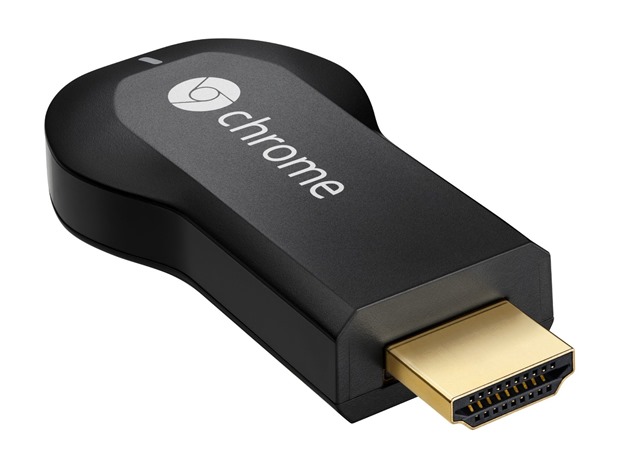 Google have yet to officially announce a date for the UK launch of the Google Chromecast however there has been the odd occasion Amazon have been able to deliver the Chromecast around the world if only for short periods of time. I managed to pick one up and here is the unboxing and basic operations. I must have spent about an hour trying to get this to work, the unboxing video is more of a highlights video if anything.
Google’s Chromecast is a simple way of streaming web video to the big screen thanks to being easier to use and slicker than your existing smart TV, set-top box or games console.
The HDMI dongle has already launched in the US, and feedback has been overwhelmingly positive. Google has promised it will launch in ‘other countries’ soon, but as of yet, there’s no news on its exact price in the UK or when it will actually launch.
Update: I have tried the Chromecast on various televsions around the house and on both main wireless networks and the problem is still evident. I will have to do some reading and maybe one day it will work…
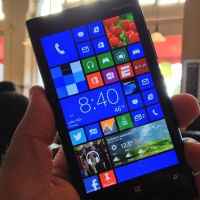
 The mobile industry seems to be full of leaks at the moment and there’s more today for the rumoured Nokia Lumia 1520 aka ‘Bandit’.
We’ve seen previous leaks about upcoming Nokia devices and a few weeks ago we heard that Nokia would be releasing 6 or so new devices at Nokia World on the 22nd October. It’s possible that one of these new devices could be the 1520 phablet device.
Once again the notorious tweeter, @evleaks, has released the main specification of the Nokia Lumia 1520 citing that it will have a 6 inch full HD screen, quad-core snapdragon 800 processor, 2GB RAM, 20 MP camera and come with either 16 or 32GB of onboard storage. @evleaks also says that the device will come in black, white and yellow although other leaked images claiming to be of the 1520 have shown the device clad in blue.
The 1520 is also expected to feature the Qi compliant wireless charging technology. Qi, developed by the Wireless Power Consortium for inductive electrical power transfer over distances of up to 4 cm.
Also expected to be announced this week is the Lumia 2520.
Perhaps the most interesting though is the long-awaited Nokia tablet, code-named “Sirius,” that is also expected to be announced alongside this raft of new smartphones. This is likely to be called the Nokia Lumia 2520, and will take the form of a 10.1-inch Windows RT device.
Tuesday is going to be a very busy news day with announcements coming from Nokia World, Apple, Google and Microsoft. Have I missed anyone?
We’ll be here with the news as we get it.

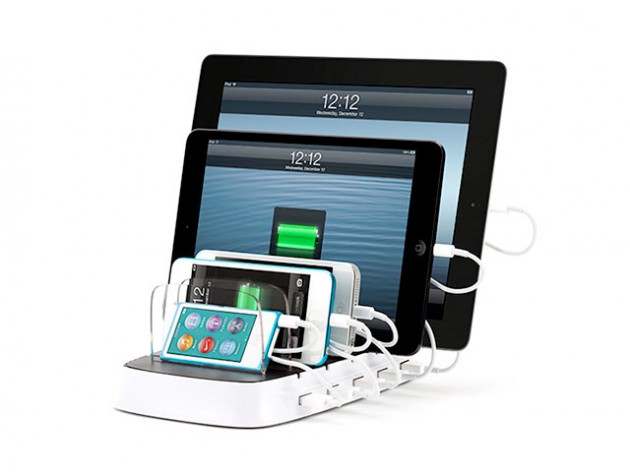 These days we all have multiple mobile devices at home that need to be charged on a regular basis. Whether it’s an iPhone or Android Smartphone or a tablet of some kind I suspect that many households have an area somewhere that you’ll find multiple chargers and a tangle of cables.
That’s where the Griffin Powerdock 5 comes in. Capable of charging up to 5 devices at the same time it delivers up to 10 watts of charging power. 5 USB sockets line one side of the unit while a series of clear plastic dividers allow you to stand each device in its own slot.
Looking something like a 21st century toast-rack the PowerDock 5 can charge anything that has a USB cable and with the 5 spaces it should prevent the pamily arguments over who’s turn it is with the charger!
It doesn’t take up much room, about the same as a single iPad. But it gives you a place to store and charge 5 iOS devices at one time, from a single power source. We think it’s the perfect charging solution for small offices or work groups, or a family full of iPhone users.
PowerDock 5 gives each tablet its own charging port and its own frosted backrest, and each charging bay is roomy enough to accommodate your iPhone, iPod or iPad in their cases.
Here’s a quick video so that you can see the unit a bit more clearly. Continue Reading »

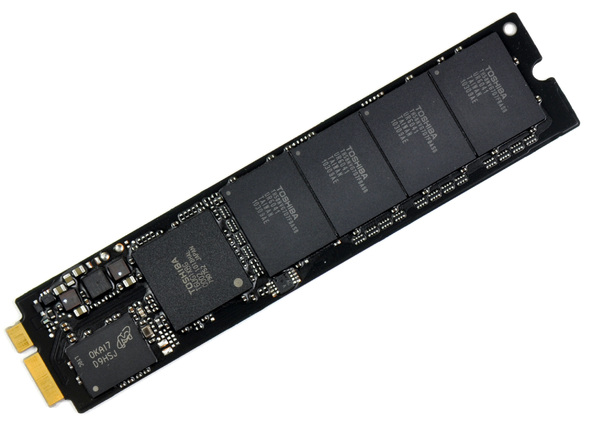 Apple has just issued a recall for some MacBook Air 2012/13 models due to issues with certain 64GB and 128GB flash drives.
Owners of MacBook Air’s sold between June 2012 and June 2013 should contact their local Apple retail store to see if their system is affected and, if so, to organise to have the flash storage drive replaced free of charge.
If you are unsure if your drive needs to be replaced you should download the MacBook Air Flash Storage Firmware Update 1.1 which will carry out a test on your drive.
The most important thing you should do is back up all of your data regularly and certainly you will need to do this prior to the drive being replaced by apple.
It is understood that drives affected by this issue simple cease to function without any prior warning so it is important that you seek assistance from Apple asap.

 Apple is once again having to play the defensive game amid allegations that the company could all too easily intercept users iMessages sent through iOS or OS X.
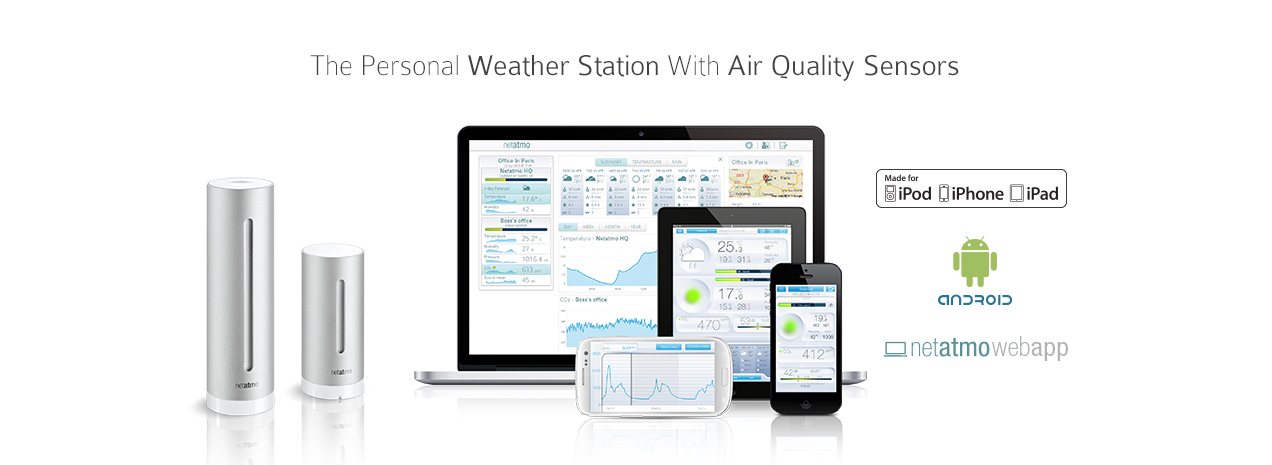 Barometers and home weather stations have been arround for centuries but the people from Netatmo have brought this concept right up to date with their Netatmo Urban Weather Station which has been specifically designed for iOS and Android devices.
What you get is two environmental monitoring units, one for indoors and one for out. The indoor unit connects to the internet over WiFi and relays its readings, alond with those obtained wirelessly from the outdoor unit, to a central location accessible with either the iOS or Android app.
The units don’t just measure temperature though as air quality, humidity, CO2 and other polutant concentrations are also measured, graphed and monitored.
In the short video below I’ll show you what the units look like as well as some live example reading from my iPad.
Connect
Connect with us on the following social media platforms.