

Matt
More than 20 years in the IT industry. Blogging with a passion and thirst for new technology since 2005.


 As I mentioned the other day, there have been several issues reported with Apple’s latest iOS 7 releases, particularly with battery life and iMessage.
Fortunately, Apple have now acknowledged the iMessage issues and are now working on a futher update, presumably 7.0.3, slated for next week, that will resolve this problem
The most frequent complaint is that messages appear to be sent, but later appear with a big red exclamation point indicating they did not go through.
The simplest and most often-suggested work-around by users is to restart the device. Another option to fix iOS 7 iMessage issues to to disable iMessage, reset the Network Settings, and then turn iMessage back on. (To reset the settings, go to Settings → General Reset → Reset Network Settings.) The later work around is more annoying, though, and seems to require frequent repetition.
“We are aware of an issue that affects a fraction of a percent of our iMessage users, and we will have a fix available in an upcoming software update,” Apple said in a statement. “In the meantime, we encourage any users having problems to reference our troubleshooting documents or contact AppleCare to help resolve their issue. We apologize for any inconvenience this causes impacted users.”
Since then, some users have complained about excessive battery use, typed letters that don’t appear on the screen, and Apple’s Siri voice-recognition service not recognizing requests. Apple released an iOS fix last week to tackle some security problems with iOS 7.0.2.
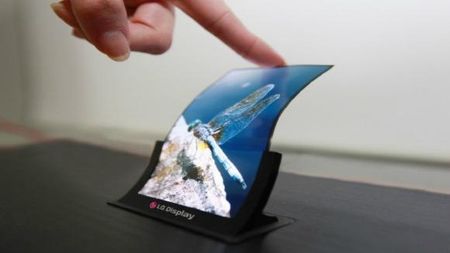
 Hot on the heels of Samsung’s announcement last week that they would release a special edition Galaxy Note 3 with curved OLED display, LG have countered with news that they will be taking this a step futher and releasing their own smartphone, the LG Z, with a flexible OLED display.

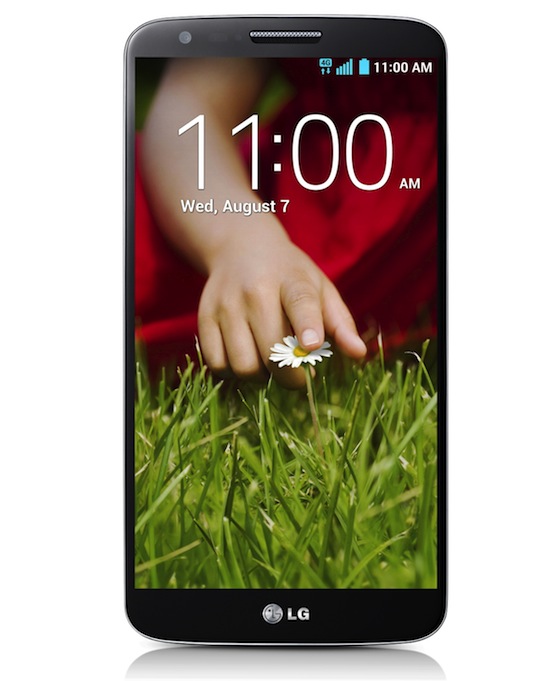 Today an official announcement from LG that the new LG G2 launched today here in the UK, available from retailers including Carphone Warehouse, EE, Three and O2.
The massive spec of the G2 makes it currently the fasest Android powered smartphone on the market. The chipset inside is a Qualcomm MSM8974 Snapdragon 800, with a 2.26GHz quad-core Krait 400 on the business end, a 5.2-inch 1920 x 1080 display, which gives us a 424 PPI density. It out performs everything else currently on the market but could that change when the Nexus 5 arrives?
Check out the full press release from LG below and we’ll hope to have some hands-on time with the LG G2 soon!

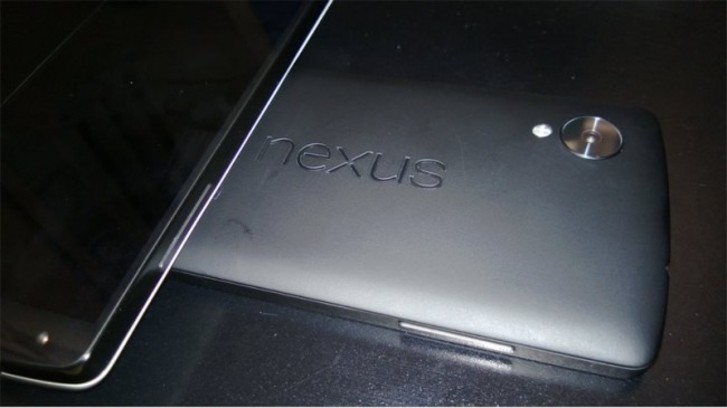 The anticipated LG Nexus 5 could well be the device that Android fans are waiting for and is expected to be the pinacle of Android smartphones.
As we get nearer to the launch date of the LG Nexus 5 more leaked images and data are appearing on the web. The latest leaks now come from a member of the MacRumours site who claims to have a new Nexus 5 in his possession and has gone a step further taking photos and providing commentary on the device.
The photo, that you can see above, shows a large camera, Nexus logo and and almost graphite colour back.
The poster “Weespeed” states that he thinks the Nexus 5 feels smaller than the LG G2 and feels close to the Nexus 7. He then goes on to say that the display on the Nexus 5 is just “Ok” and doesn’t feel as high in quality as the Galaxy Note 3.
What we understand of the Nexus 5 Specification is that we can expect a 5-inch full HD display, 2.3 GHz Qualcomm Snapdragon 800 processor, at least 2GB of RAM, 16GB of storage, 8-megapixel rear-camera, 1.2-megapixel front-camera, 2300mAh battery, wireless charging, LTE and NFC.
We know that there is a Google event to be held on the 15th October where they are going to offically announce Android 4.4 Kit Kat so we expect that the LG Nexus 5 will follow close behind that event and will also feature Google’s latest Android OS.

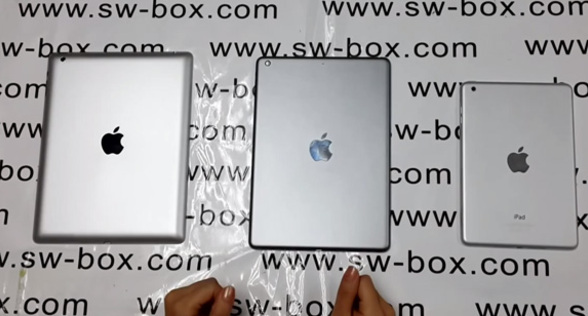 We’re expecting an Apple event sometime in October where we’ll get to see the new iPad 5 and iPad Mini 2. However, if you are as impatient as we are you’ll be pleased to know that images and hands on videos of the anticipated next-gen iPads have already leaked out.
The iPad 5 leaked images and video appear to show just the aluminium back panels of the new iPads but do also reveal that the iPad 5 will be smaller, thinner and lighter than the iPad 4 and seems to be a slightly different form fact too. The iPad Mini 2 appears to be pretty much the same size and shape as the existing mini so expect all the changes to be on the inside!
Both the iPad 5 and iPad Mini 2 are expected to feature the same fingerprint scanner as featured on the new iPhone 5s as well as updated cameras but neither appears to reveal a built-in flash.
The hope from us us that we’ll see a retina display on the iPad Mini 2 as well as improved battery life and CPU performance on both models. I suspect that both will have the new A7 chip in there too.
So check out the video from SW-BOX.COM below and see if that give you an appetite for some new Apple tablet goodness!

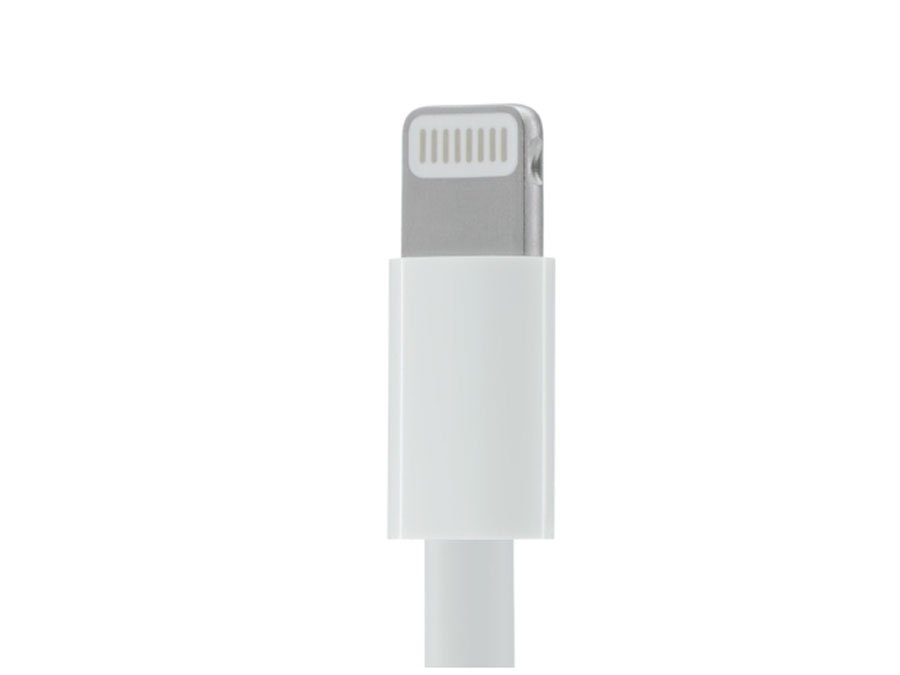 Several years ago, most smartphone manufacturers all began to adopt a standardised charging connector for their phones. The connector to win out was, of course, the microUSB and that can now be found on the vast majority of phones now sold, with one significant exception, Apple.
Apple have always had their own proprietary connectors, starting with the 30 pin connector first seen back in 2003 on the 3rd generation iPod’s. Apple stayed with the dock connector until they released the iPhone 5 in September of last year and switched to the Lightning Connector. The change from the 30-pin connector to Lightning caused a bit of a stir and rendered existing iPhone/iPod accessories all but obsolete.
One of the reasons Apple stuck with the dock connector for so long is that those 30-pins aren’t just for sync and charge. Not only does the connector include USB and serial connections but also video out and audio in/out. This is perhaps one of the main reasons for Apple not heading down the mini or microUSB road.

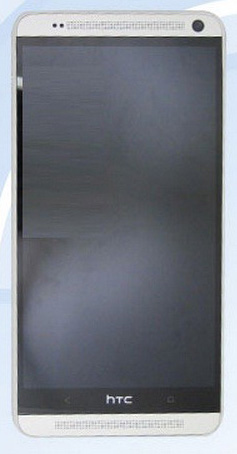 There has been a lot of talk about the HTC One Max with plenty of leaked images and ‘news’ of the device. However, many sources now indicate that the new device that’s set to take the flagship position win HTC’s range will see a October 15th launch date.
With so many of their competitors bringing out large-screen and phablet devices it makes sense (no pun intended) for HTC to bring their own large slab phone to market too. Looking vertically the same as the HTC One, the HTC One Max is said to be sport a large screen of at least 6 inches, have the same ultra pixel camera as the HTC One, BoomSound speakers 2GB RAM and will use the Snapdragon S4 Pro chip featuring a quad-core processor, clocked at 1.7GHz.
Further rumours now surround the One Max as additional leaked images now appear to include a fingerprint scanner on the rear which is likely to be similar to the one now featured on the latest iPhone 5S.
The One Max, previously know simply by its T6 codename, also appears on Teena, an FCC-like telecommunication regulatory authority in China.
October 15 seems set to be a busy news day as the date has also been set by Apple to officially announce the new iPad 5 and iPad Mini 2. There’s also said to be an HTC press event next week which would further reinforce a release date in the coming fortnight.
Well cover more of the HTC One Max as soon as we get the skinny from HTC themselves.
More HTC One Max news can be found over at cnet.com

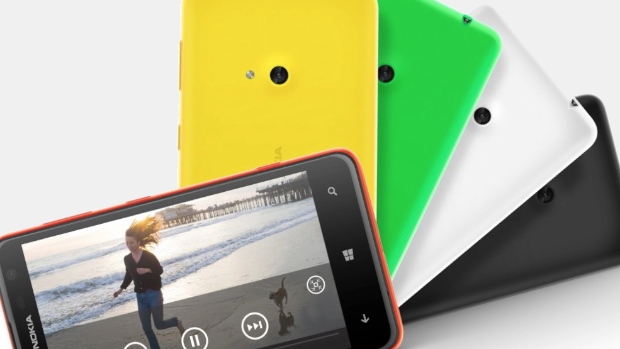 Nokia have been in the news quite a lot recently with Microsoft buying their mobile unit and the popularity of the Lumia 1020, could it be that Nokia are beginning to bounce back?
The answer could well be yes if the Wall Street Journal’s sources are to be believed. According to them, Nokia will be releasing 6 new Lumia phones, running Windows Phone 8 and possible some other more entry level S40 based devices.
Perhaps the most interesting though is the long-awaited Nokia tablet, code-named “Sirius,” that is also expected to be announced alongside this raft of new smartphones. This is likely to be called the Nokia Lumia 2520, and will take the form of a 10.1-inch Windows RT device.
The product blitz to be unveiled in Abu Dhabi Oct. 22, will include several Lumia smart devices that run Microsoft’s Windows phone platform, and lower-end devices based on Nokia’s S40 software, these people said. Nokia’s first tablet device will also debut, and will run Windows 8 software.

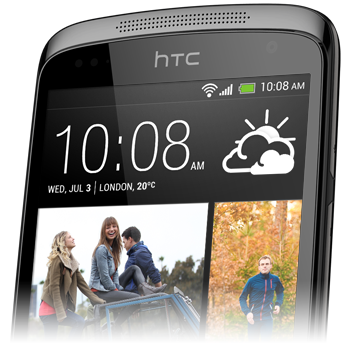 About three weeks ago HTC announced their latest device to have the Desire name attached to it; the HTC Desire 500.
The Desire 500 bring the Desire range up to date with the user interface, HTC Sense 5.0, and features taken straight from the newer flagship models and rolling them in to a much more modestly priced device.
The specification isn’t bad either, a Quad Core 1.2GHz CPU and 1GB RAM, 8MP camera and 1.6MP front-facing camera. There’s even a dual-SIM version available too.
The 500 comes in Lacquer Black and Glacier Blue variants.
Check out the unboxing video below where you can see the Desire 500 in a little more detail and also see the benchmark results.

 If, like me, you’ve been looking for BBM on the App Store on via Google Play you may be wondering what’s going on… repeated searches yield no results yet it’s supposed to be there by now right?
Well yes, BBM should have been available for both iOS and Android by now but before the BlackBerry guys could make the official version available apparently ‘someone’ allowed an unreleased version of the Android app to be leaked online and according to the official BlackBerry blog, that unreleased version caused some ‘issues’. As a result the rollout of BBM to Android and iOS is now on hold…
Prior to launching BBM for Android, an unreleased version of the BBM for Android app was posted online. The interest and enthusiasm we have seen already – more than 1.1 million active users in the first 8 hours without even launching the official Android app – is incredible. Consequently, this unreleased version caused issues, which we have attempted to address throughout the day.
Our teams continue to work around the clock to bring BBM to Android and iPhone, but only when it’s ready and we know it will live up to your expectations of BBM. We are pausing the global roll-out of BBM for Android and iPhone. Customers who have already downloaded BBM for iPhone will be able to continue to use BBM. The unreleased Android app will be disabled, and customers who downloaded it should visit www.BBM.com to register for updates on official BBM for Android availability.
As soon as we are able, we will begin a staggered country roll-out of BBM for Android and continue the roll-out of BBM for iPhone. Please follow @BBM on Twitter for the latest updates and go to www.BBM.com to sign-up for updates about BBM for Android and iPhone. These issues have not impacted BBM service for BlackBerry.
That’s a bit of a mess then. Hopefully they’ll have that all resolved quickly.
Posted by: Matt
Connect
Connect with us on the following social media platforms.